There’s a two or three week stretch every November in Central New Jersey when the oaks finally let go. One windy weekend and every gutter in Jackson, Howell, and Freehold is packed to the top. What you do in the week or two after that has more to do with how your roof gets through winter than almost anything else on the fall to-do list.
This is a guide to fall gutter cleaning for New Jersey homes: when the window actually is, what a clogged gutter does to the roof and the house below it, how to tell from the ground whether yours are full, when it’s safe to do it yourself, the honest answer on gutter guards, and the signs that a cleaning won’t fix what’s wrong.
When should you clean your gutters before winter in New Jersey?
Clean gutters after the last leaves drop and before the first hard freeze, which in Central New Jersey usually means mid to late November. Oaks are the last trees to shed, so cleaning in October often has to be redone. Most homes need it twice a year, late spring and late fall. Homes under heavy oak or pine cover, common in Jackson, Manchester, and the Pine Barrens edge, often need a third pass.
Why the Window Is Mid to Late November
Gutter cleaning is about timing more than technique. Clean too early and the oaks refill them. Clean too late and you’re scooping frozen leaves, or you can’t, because the ladder is on ice.
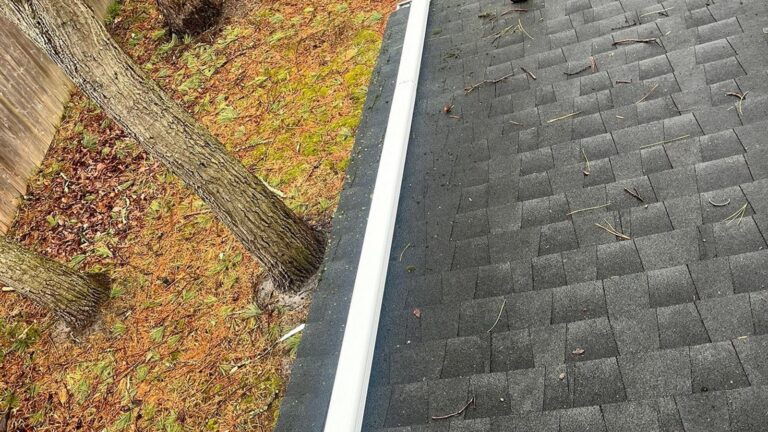
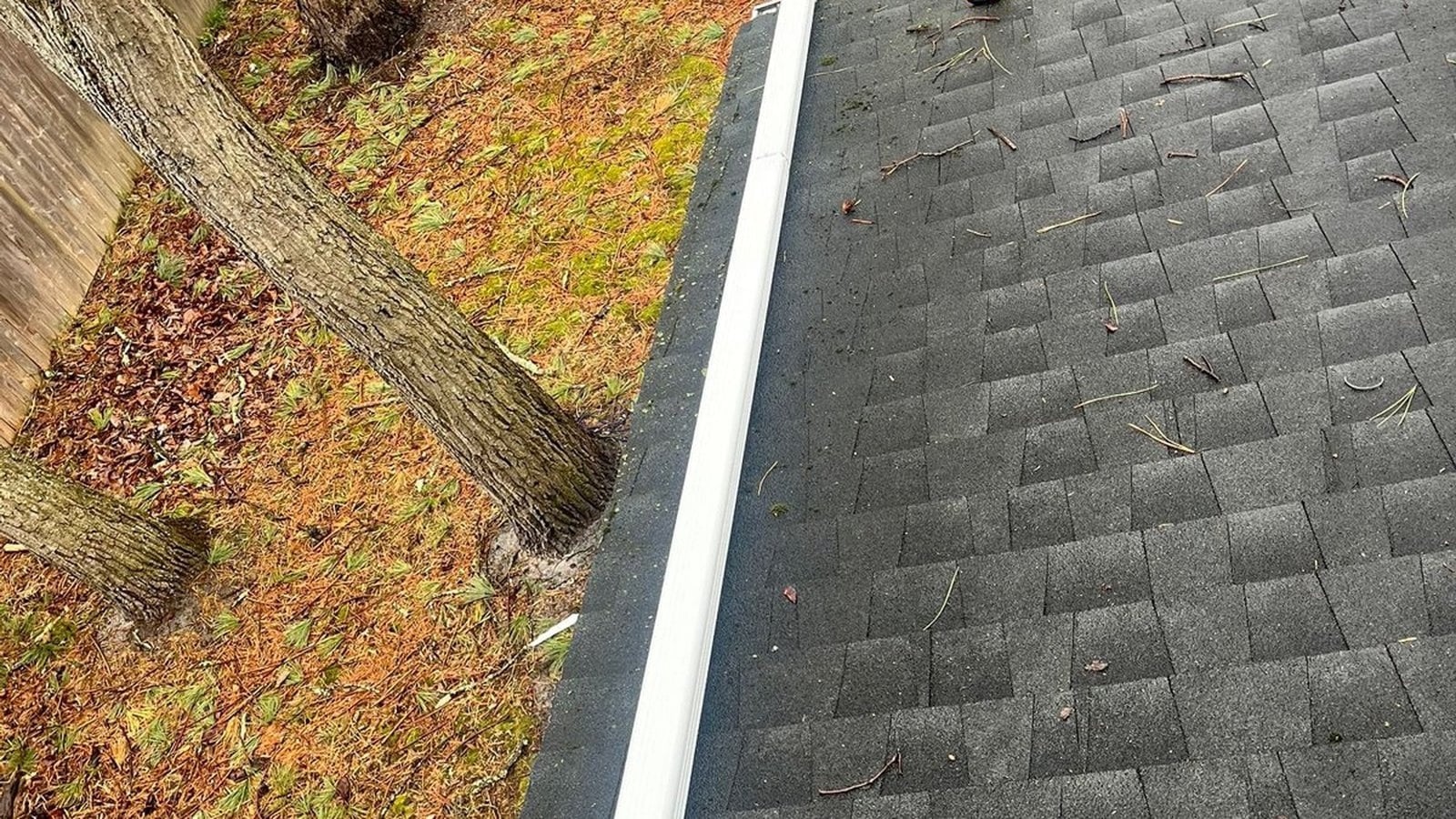
In Monmouth, Ocean, and Burlington counties, maples and birches drop in October. Oaks hold on until the first real cold snaps, usually the second or third week of November, and some keep dropping into December. Pine needles come down all fall and pack into valleys and gutter corners like felt. The practical target is the week after your street’s oaks are mostly bare, and before nighttime temperatures stay below freezing.
The reason the freeze matters: a gutter full of wet leaves doesn’t drain. It freezes into a solid block. That block does three things at once. It adds a lot of weight to brackets that were sized for flowing water, it gives any ice dam a head start by filling the eave with ice before the snow even arrives, and it holds moisture against the fascia board behind it for months.
What a Clogged Gutter Actually Does
Gutters have one job: move water off the roof and away from the house. When they can’t, the water finds somewhere else to go, and none of the options are good.
| Where the Water Goes | What You See | What It Turns Into |
|---|---|---|
| Over the back edge, behind the gutter | Dark streaks on fascia, peeling paint at the roofline | Rotted fascia and soffit, gutters that pull away because the wood no longer holds a screw |
| Over the front edge, sheeting down | Water pouring over in rain, stains on siding, trench in the mulch | Saturated soil at the foundation, damp basements and crawlspaces, settled walkways |
| Nowhere: it sits and freezes | Gutters sagging in the middle, icicles along the whole run | Bent or torn-off gutters, and the start of an ice dam under the first course of shingles |
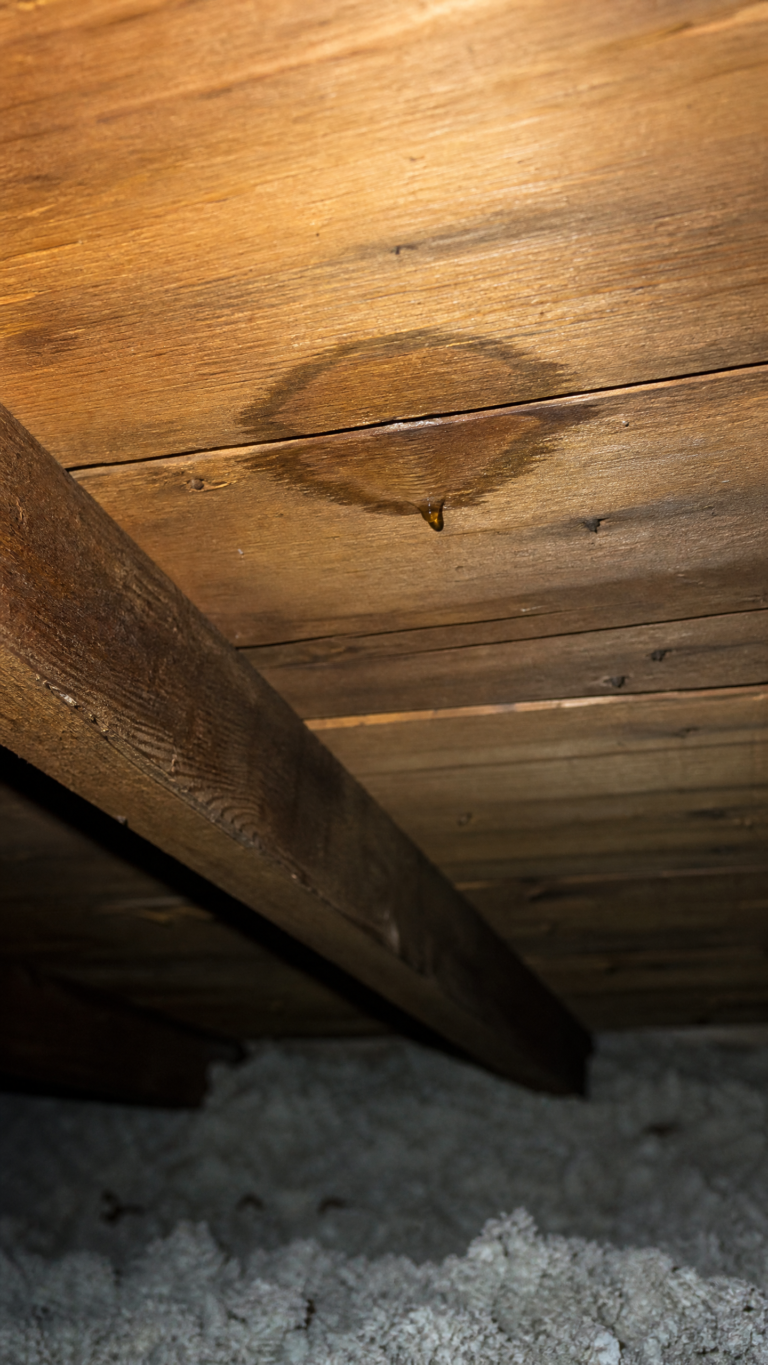
| Back up under the shingles at the eave | Nothing, until a ceiling stain near an outside wall | Wet decking, wet insulation, and on older roofs without ice and water shield, interior leaks |
| Down a clogged downspout | Downspout dribbles in a downpour, gurgling, splits at the seams in winter | Frozen, split downspouts and the whole run backing up behind them |
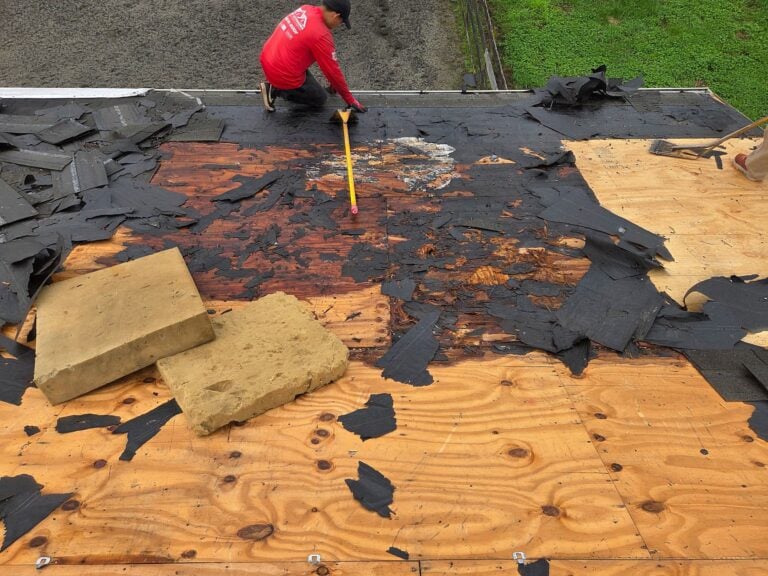
The roof damage is the part people underestimate. A gutter that overflows at the back edge keeps the first foot of roof decking wet all winter. That is exactly the spot where ice dams form and where old roofs leak first. We see a lot of “roof leaks” on inspections that are really gutter problems.
How to Tell Your Gutters Need Cleaning Without a Ladder
Walk the house during or right after a steady rain. That’s the only time gutters tell the truth.
Water sheeting over the front edge anywhere along the run. A properly working gutter shows nothing at the edge during normal rain.
A downspout that barely runs while it’s pouring, or one that runs while the others are quiet.
Dirt stains or tiger striping on the siding directly below a gutter section.
A trench or splash pattern in the mulch under one spot.
On a dry day, look for anything growing out of the gutter, a visible mound of leaves above the rim, a section that sags or sits lower than the rest, and birds going in and out. Any of those means it’s full.
Doing It Yourself: Where the Line Is
A single-story ranch with a gentle roof and gutters you can reach from a 6-foot step ladder is a reasonable homeowner job. The rules that keep it reasonable:
Use a ladder with a standoff or stabilizer so it rests on the roof or wall, not on the gutter. Gutters aren’t built to carry a ladder and a person, and bending the front lip is the most common way homeowners create the sag they were trying to prevent. Keep your hips between the rails and move the ladder instead of reaching. Scoop by hand or with a plastic gutter scoop, not a metal trowel that scratches the coating. Then run a hose at the far end from the downspout and watch: water should move steadily toward the outlet and come out the bottom clean. If it pools, the pitch is off. If the downspout backs up, feed the hose down from the top or tap the elbows until it clears.
Where the line is: anything two stories or higher, any roof you’d need to walk on, any day the roof or ground is wet or icy, and anyone who isn’t completely comfortable at height. Falls from ladders are the single biggest cause of serious injury in home maintenance, and the savings on a gutter cleaning don’t cover an emergency room visit. Most of the homes in the 55-plus communities around Whiting, Manchester, and Holiday City are single story, and they are also the homes where the person on the ladder shouldn’t be.
Gutter Guards: The Honest Version
We install gutter guards, so take this as the straight answer rather than a pitch.
Good guards reduce cleaning. They don’t eliminate it. A micro-mesh guard, stainless mesh on an aluminum frame that attaches under the first course of shingles, keeps leaves, pine needles, and shingle grit out and handles heavy rain on most roof pitches. Under oak and pine cover, those are worth the money. You’ll still want the tops brushed off once a year and the downspouts checked, but you’ll stop scooping sludge twice a year.
The ones to skip: foam inserts and bottle-brush guards. They clog from the inside within a season or two, hold moisture against the gutter, and are worse than nothing once they fail. Cheap plastic screens that lay loose in the gutter blow out and let small debris through.
Two situations where guards aren’t the answer: a roof with a lot of pine needles directly above and a steep pitch, where water can overshoot some guard designs in a downpour, and gutters that are already undersized, misaligned, or pulling off the fascia. Guards on a bad gutter are a cover on a broken system.
When Cleaning Isn’t the Fix
Sometimes a cleaning shows that the gutter itself is the problem. Look for these while the gutters are empty, or ask whoever cleans them to:
Standing water after you flush. The run has lost its pitch, usually because the hangers loosened or the fascia behind them softened. Re-pitching or re-hanging fixes it if the wood is sound.
Seams dripping, rust spots, or pinholes. Sectional gutters leak at every joint eventually. Seamless aluminum has no joints to fail along the run.
The gutter is pulling away from the house. Pull a hanger and look at the fascia. If a screwdriver sinks into the wood, the fascia is rotted and the gutter can’t be reattached until it’s replaced.
Overflow even when clean. Many homes built in the 1990s and 2000s got 5-inch gutters on roofs that drain a lot of water into a few spots. A 6-inch gutter with a larger downspout solves chronic overflow in valleys and long runs.
Downspouts that end at the foundation. Add extensions so water discharges at least 4 to 6 feet from the house, especially on homes with basements in Freehold and Marlboro.
If two or more of those show up, you’re past cleaning. The good news is gutter replacement is a one-day job on most homes, and doing it before winter means the new system is in place for the ice.
Your November Gutter Checklist
Before the first hard freeze
- Wait until the oaks on your street are mostly bare, then schedule or do the cleaning within the week.
- Scoop every run, including the short sections over porches and garages that always get forgotten.
- Flush each run with a hose and watch it drain. Note any section that holds water.
- Clear every downspout from the top and confirm it runs clean at the bottom.
- Check that downspout extensions are attached and pointed away from the foundation.
- Look at the fascia behind the gutter for dark staining or soft wood.
- Trim any branch within reach of the roof. It’s the branch, not the tree, that fills the gutter.
- If you have guards, brush the tops clear and confirm water still gets through at the valleys.
TL;DR: In Central New Jersey, clean gutters in mid to late November, after the oaks drop and before the first hard freeze, and again in late spring. A clogged gutter rots the fascia, soaks the foundation, freezes into a block that tears gutters off, and gives ice dams a head start under the first course of shingles. Check from the ground during a rain: water over the edge, a dead downspout, or stained siding means they’re full. Single-story homes with a stabilized ladder are a reasonable DIY job; two stories, steep roofs, and icy days are not. Micro-mesh guards cut the work under heavy tree cover; foam and brush inserts don’t. Standing water, leaking seams, gutters pulling away, or chronic overflow mean repair or replacement, not another cleaning.
Want them cleaned, checked, and ready for winter without getting on a ladder?
Elegant Exteriors cleans, repairs, replaces, and installs guards on gutters across Monmouth, Ocean, and Burlington counties. We flush every run, clear every downspout, and tell you honestly if anything needs more than a cleaning.