Here’s a conversation we have a few times a week. A homeowner in Toms River calls because a couple of shingles blew off during the last nor’easter, or there’s a stain on the ceiling in the back bedroom. They want it fixed. Fair enough. But the real question sitting underneath that call is one most people don’t ask out loud: is this a repair, or is this the beginning of the end?
That question deserves a straight answer, and it’s not always “replace.” Plenty of roofs in Ocean County get talked into replacement years before they need it. Plenty of others get patched over and over until a small problem turns into rotted decking and a much bigger bill. This post is about figuring out which side of that line your roof is on.
Should I repair or replace my roof?
Repair your roof when the damage is confined to one area, the shingles around it are still flexible and holding granules, the roof is under about 15 years old, and the decking underneath is dry. Replace it when problems are showing up in more than one section, shingles are brittle or cracking when handled, the roof is past 18 to 20 years in New Jersey’s coastal climate, or a repair estimate lands anywhere near a third of what a new roof would cost. A quick way to think about it: repairs fix a spot, replacement fixes a system.
Start With the Damage Map, Not the Symptom
Most homeowners fixate on the one thing they noticed. The missing shingle. The drip. But a single symptom tells you almost nothing about whether a roof is done. What matters is the pattern.
Before you call anyone, walk the perimeter of your house and note where problems are showing up. Not what they are yet, just where. Is everything happening on the one slope that faces the bay? Or are you seeing issues on the front, the back, and around the chimney?
Localized damage usually has a specific cause: a branch came down, a piece of flashing failed, a vent boot cracked, wind caught one exposed corner. These are repair situations, even on an older roof.
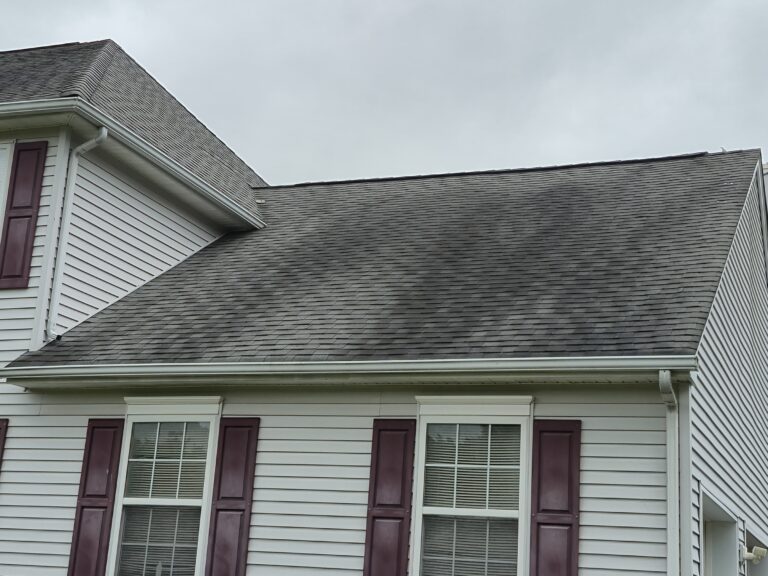
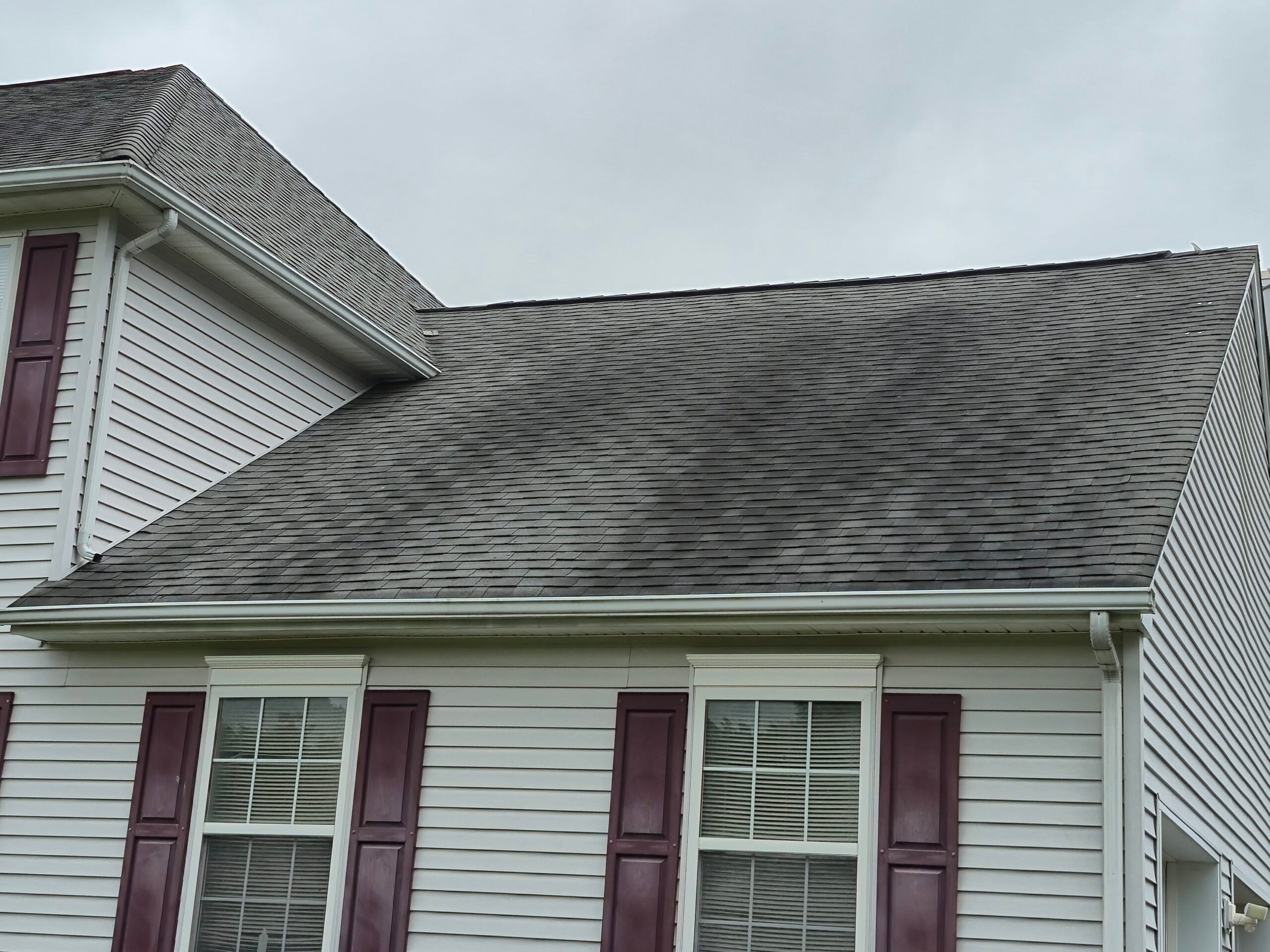
Distributed damage means the roof itself is failing. When shingles on three different slopes are all losing granules or lifting at the edges, the cause isn’t an event. It’s age. Patching one area just moves the next leak somewhere else.
This one distinction settles more repair-versus-replace questions than any other factor.
The Toms River Roof Problem Nobody Talks About: The Sandy Cohort
Toms River has a roofing situation that’s a little different from Jackson or Freehold, and it’s worth understanding if you live here.
After Superstorm Sandy in October 2012, thousands of homes in Toms River, Ortley Beach, Silverton, and along the Barnegat Bay waterfront got new roofs between 2013 and 2015. Some were full rebuilds. Many were fast replacements done under insurance pressure, by whoever was available, with whatever materials were in stock.
Those roofs are now 11 to 13 years old. In a mild climate, that’s mid-life. Here, it isn’t.
We’re starting to see a wave of Sandy-era roofs coming in for evaluation, and they tend to fall into two groups. The ones installed by established contractors with proper underlayment and ice and water shield are generally fine. The ones that were rushed are aging like 18-year-old roofs. Nail patterns are off, starter strips are missing, flashing was reused instead of replaced.
If your roof went on in that window, it’s worth a professional look even if nothing is visibly wrong yet. Not because it’s necessarily failing, but because knowing which group you’re in changes your whole timeline.
Barrier Island vs. Mainland: Your Address Changes the Math
Toms River is a big township, and roof lifespan is not the same across it.
Homes on the barrier island (Ortley Beach, Normandy Beach, the Seaside border) and directly on the bay in Silverton or Snug Harbor take a beating that inland neighborhoods don’t. Constant salt spray, unobstructed wind, and reflected UV off the water can shave 5 to 8 years off a shingle’s rated lifespan. A 30-year architectural shingle may realistically give you 20 to 22 years out there.
Mainland neighborhoods west of the Parkway, places like Holiday City, Silver Ridge Park, and the areas near Route 37 and Route 9, see closer to normal aging. Salt still travels, humidity is still high, but you’re not getting the direct hit.
The practical takeaway: a bayfront roof at 18 years is in the same condition as a mainland roof at 24. Adjust your expectations accordingly, and be skeptical of anyone who quotes a “30-year roof” for a house that can see the water.
The Shingle Test You Can Do From a Ladder
If you’re comfortable on a ladder (and only if you are), there’s one hands-on check that tells you more than any photo from the ground. Reach the edge of the roof and gently lift the bottom corner of a shingle about an inch.
If it flexes and settles back down, the asphalt still has oil in it. The shingle is alive. Repairs will hold.
If it feels stiff, resists, or you hear a faint crack, the shingle has gone brittle. The petroleum compounds that keep it pliable have baked out. Brittle shingles can’t be repaired effectively because every shingle you disturb during the repair cracks too. A contractor who tries will end up replacing a growing patch anyway.
Brittleness is the single most reliable indicator that a roof has crossed from “repairable” into “replace.” It matters more than age, more than appearance, more than what the neighbor’s roof looks like.
What Repairs Actually Cost vs. What They Buy You
Homeowners often assume repair is always the cheaper path. Sometimes it is. Sometimes it’s just a slower way to spend more money.
| Situation | Typical Repair Cost | Years It Buys | Our Take |
|---|---|---|---|
| Handful of wind-blown shingles, roof under 15 yrs | $300 to $700 | Remaining roof life | Repair. No question. |
| Failed flashing or vent boot, roof any age | $400 to $1,200 | Remaining roof life | Repair, unless shingles are brittle. |
| One slope with granule loss, roof 15 to 20 yrs | $1,500 to $4,000 (partial reroof) | 3 to 5 years | Gray area. Depends on your plans for the house. |
| Leaks in 2+ areas, roof 18+ yrs | $2,000 to $5,000+ (and rising) | 1 to 2 years, maybe | Replace. You’re paying twice. |
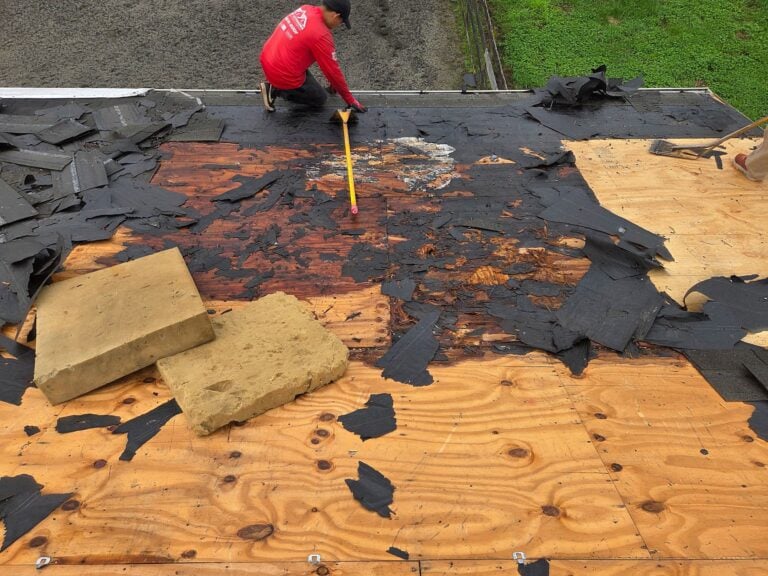
| Soft or spongy spots when walked on | Not a repair situation | 0 | Replace, and soon. Decking is compromised. |
The rough rule we use: if the repair estimate is more than about 30% of what a replacement would cost, and the roof is past 15 years, replacement is almost always the better financial move. You get a new warranty, a new lifespan, and you stop the cycle.
Five Questions That Settle It
When a homeowner is on the fence, these are the questions we walk through together. Answer them honestly and the decision usually makes itself.
The Repair-or-Replace Checklist
1. Is the problem in one place or several?
One place leans repair. Several leans replace.
2. Do the shingles still bend?
Flexible leans repair. Brittle means replace.
3. How old is it, adjusted for where you live?
Under 15 leans repair. Over 20 (or over 16 on the water) leans replace.
4. Has this roof been repaired before?
First repair is fine. Third repair in five years means the roof is telling you something.
5. How long are you staying?
Selling in two years? A documented repair may be enough. Staying ten? A new roof pays for itself in avoided headaches and a transferable warranty.
The Mistake of Waiting for a Leak
A lot of homeowners treat the first interior leak as the starting gun for thinking about replacement. By then you’ve usually lost the chance to do this on your own terms.
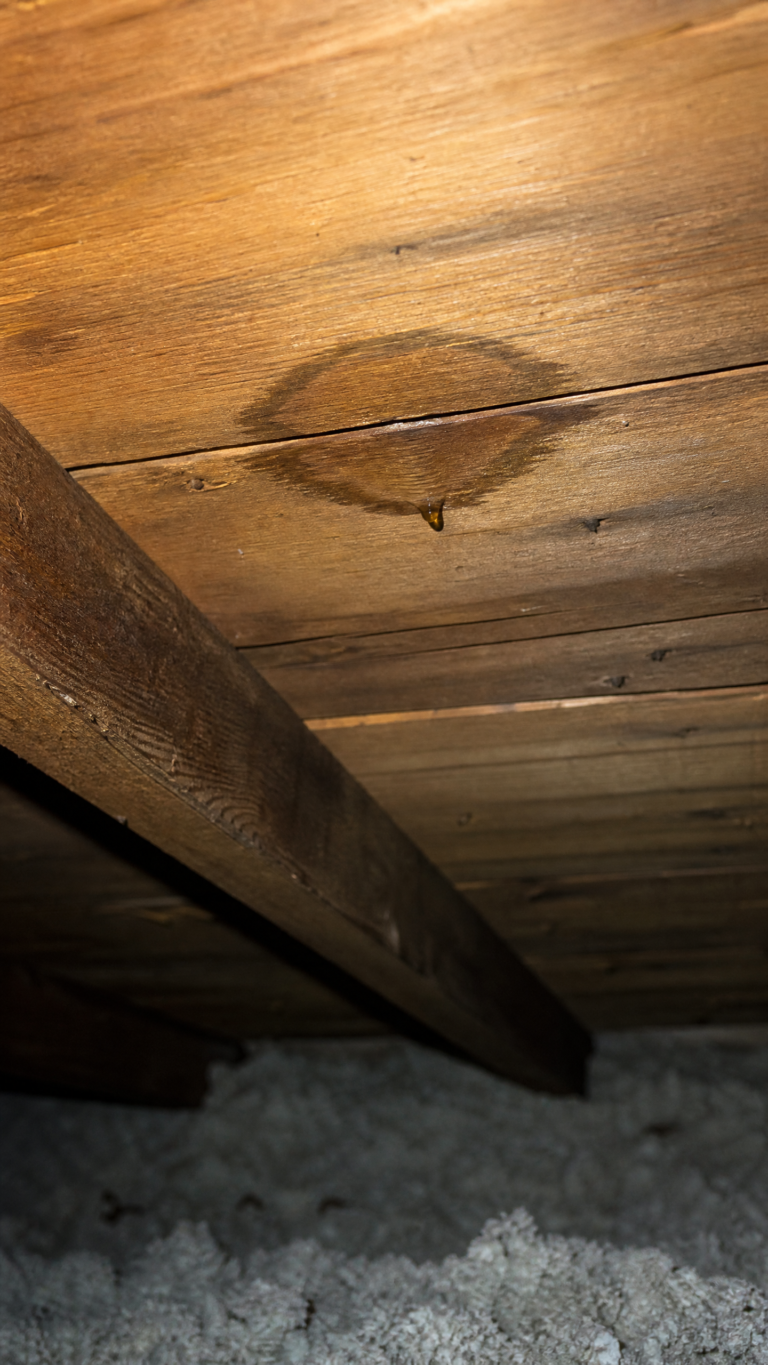
Water doesn’t drip through a ceiling the moment it gets past the shingles. It travels along rafters, soaks into insulation, and sits on the plywood deck. By the time you see a stain, there’s often been water in the attic for months. On a roof that’s already old, that means the replacement now includes decking repairs, sometimes insulation, sometimes drywall. The project just got 20 to 40% more expensive than it would have been the previous spring.
If your roof is in the “replace within a few years” category, the smart play is to schedule it during a slow period on your timeline, not during an emergency. You get to choose the contractor, compare materials, and lock in pricing. Nobody makes good decisions with a bucket in the hallway.
What About Just Layering Over It?
Someone will offer you this. A roof-over (installing new shingles directly on top of the old ones) costs less because there’s no tear-off. In Toms River specifically, we’d push back hard on it.
Roof-overs hide whatever is happening to the deck. On a house that’s been through a decade-plus of coastal moisture, that’s a real gamble. They also add weight, run hotter (which shortens the new shingle’s life), and most manufacturers will not extend an enhanced warranty over a second layer. If you’re paying for a new roof, pay for the tear-off. You’re buying the inspection of the decking as much as the shingles.
Ranch Homes in the 55+ Communities: A Specific Note
Holiday City, Silver Ridge, Crestwood Village, and similar communities make up a big part of Toms River, and those homes have a particular profile. Most are single-story ranches built in the 1970s and 80s, low-pitch roofs, often with a second or third layer of shingles by now.
Low-pitch roofs shed water slowly, so they’re less forgiving of aging shingles and clogged gutters. And if there are already two layers up there, code doesn’t allow a third. That means any “repair” that involves the shingles is really a replacement conversation.
The good news is these roofs are usually simple: one or two planes, few penetrations, easy access. Replacement on a ranch in Holiday City is one of the more straightforward jobs we do, and it often comes in lower than homeowners expect.
When You Do Replace, Get the Warranty That Matches the Location
If the answer turns out to be replacement, one last thing. Roofs near the water need a warranty that actually covers wind and workmanship, not just a shingle defect warranty from the manufacturer.
Manufacturer warranties on the shingle itself won’t help you if the roof fails because of how it was installed. That’s the contractor’s workmanship warranty, and on the Toms River waterfront, it’s the one that matters. GAF Master Elite contractors can offer enhanced warranties where GAF backs the labor directly, which is a meaningful difference when your roof is going to see 60 mph gusts every winter.
We covered warranties in more depth in our post on why roofing estimates vary so much. Worth a read before you sign anything.
TL;DR: The repair-or-replace decision comes down to pattern, not symptom. Damage in one spot on a flexible, under-15-year roof is a repair. Damage in multiple areas, brittle shingles, or a roof past 18 to 20 years (sooner on the barrier island or bayfront) means replacement. If a repair quote is more than 30% of a new roof, replace. Toms River homeowners with roofs installed in the post-Sandy rush of 2013 to 2015 should get an evaluation now, before a leak makes the decision for them.
Not sure which side of the line your roof is on?
Schedule a free roof evaluation and we’ll tell you honestly whether it’s a repair, a replacement, or nothing at all. Serving Toms River, Silverton, Ortley Beach, Holiday City, and all of Ocean County.